
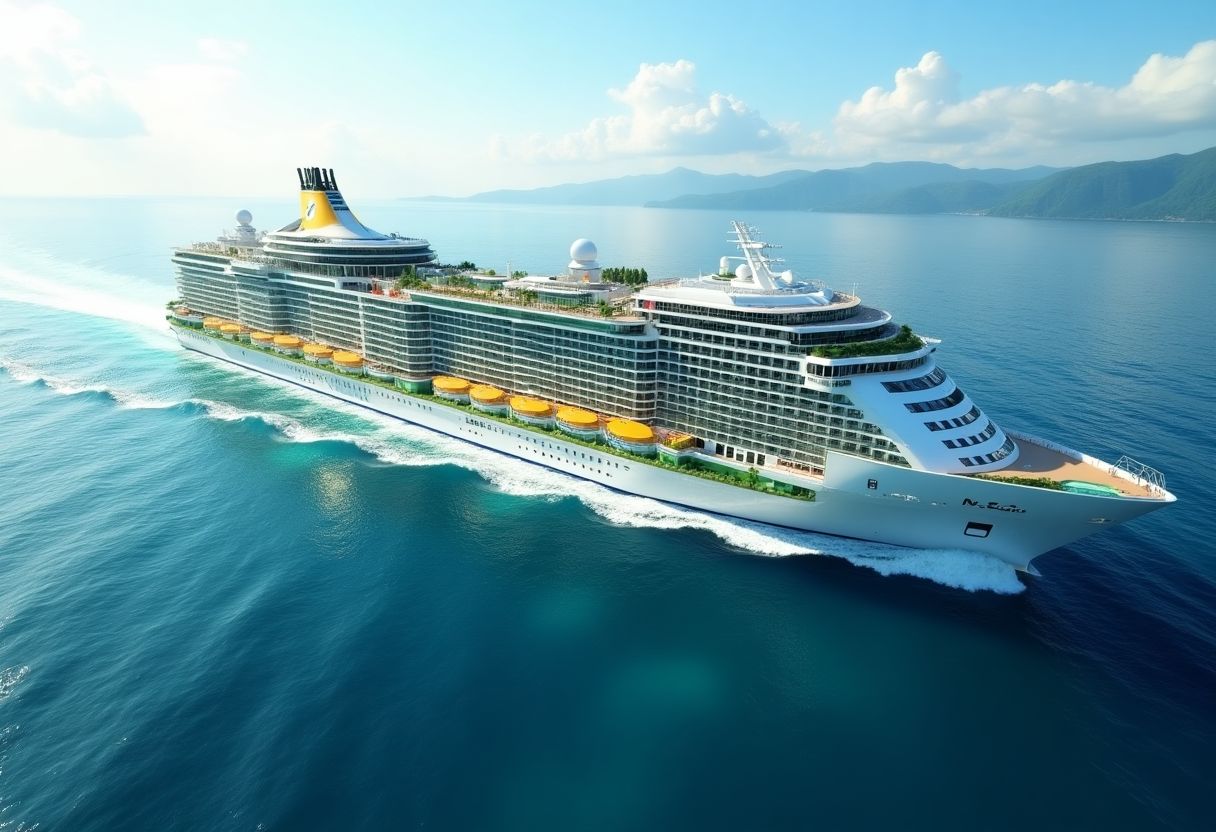
In today’s world, the call for sustainable tourism and environmental responsibility is louder than ever. With the increasing number of people taking to the seas for vacation, major cruise lines are feeling the heat to adopt more eco-friendly practices. Among them, Royal Caribbean has set some impressive goals to enhance sustainability on its journeys. Unlike many traditional travel methods, cruising presents unique challenges in waste management and energy efficiency, which is why such commitments stand out.
The need for eco-friendly cruising
One might wonder what makes a cruise ship eco-friendly that separates it from other modes of transport. Cruise ships have been notorious for generating high volumes of waste and using vast amounts of non-renewable resources. This kind of operation naturally leads to higher carbon emissions, impacting marine life and coastal environments. Thus arises the fundamental need for cruise liners to shift gears toward sustainable sourcing and operations.
With this urgent necessity, companies like Royal Caribbean are stepping forward in the industry to implement changes that effectively reduce their carbon footprint while focusing on environmental responsibility. This change is not just about meeting regulatory requirements but aligning with global trends towards greener choices for travelers and communities alike.
Advanced waste management systems
Effective waste management has become a cornerstone of sustainable cruising. Onboard, facilities now function similarly to small cities, requiring sophisticated systems to handle daily waste production. Instead of merely dumping waste at sea or at port, modern cruise ships process and recycle much of what they produce, minimizing landfill usage drastically.
Cruise lines have begun to invest heavily in closed-loop scrubbers that clean exhaust emissions before releasing them into the atmosphere. Additionally, they’re turning towards anaerobic digesters to process food waste and generate biogas, contributing to renewable energy sources onboard. These advancements showcase the tangible steps being taken toward reducing single-use plastics and enhancing energy efficiency along each voyage.
Micro-plastics and ocean health
Reducing micro-plastic pollution forms another critical challenge for these mighty vessels. Levels of single-use plastics reduction have reached unprecedented metrics. Royal Caribbean achieves this by providing alternatives like reusable straws, refill stations, and eliminating unnecessary plastic packaging wherever possible. This fight against micro-plastics is an integral part of their strategy to improve ocean health, ensuring that the vibrant beauty beneath the waves remains untainted.
Innovations in carbon footprint reduction
The journey toward lowering carbon footprints underlines the transformation within the cruise industry. Ships now feature innovative designs equipped with hybrid power plants, prioritizing the use of cleaner fuels over traditional heavy fuel oil. By embracing advances in renewable energy technology, they manage to lower sulfur emissions significantly, offering possibly greener voyages than we have seen before.
Moreover, state-of-the-art air lubrication systems are applied across hulls to decrease friction in marine water, leading to enhanced fuel savings. Other features often include LED lighting, smart HVAC systems for efficient heating and cooling, and itineraries optimized for maximum fuel conservation without compromising passenger experience.
Sustainable fuel alternatives
Explorations continue into alternative fuels like LNG (Liquefied Natural Gas), hailed as one of the cleaner options available today. LNG produces fewer CO2 emissions compared to conventional fossil fuels and creates an almost negligible amount of particulate matter. Pursuing such innovative alternatives comes with the promise of steering closer towards overall sustainability within maritime transport.
Commitment to sustainable tourism
But enhancing the physical design of ships isn’t enough. Sustainable tourism demands careful planning and collaboration between cruise lines and destination ports. Efforts expand beyond transforming technical components aboard; there’s also emphasis on ensuring shore excursions are managed responsibly so that local cultures and ecosystems aren’t disrupted.
Royal Caribbean pushes for partnerships that encourage environmentally conscious excursions supporting local economies rather than exploiting them. Tourists benefit from authentic experiences grounded in cultural immersion instead of superficial sightseeing. With a focus on keeping natural habitats protected, visitors leave a positive footprint despite traversing popular tourist spots worldwide.
Empowering local communities
Many initiatives concentrate on empowering community-focused developments both financially and socially. Investment in educational programs illustrates how local populations can partake sustainably alongside a thriving tourism sector, crafting opportunities conducive to long-term growth. Advising trails, wildlife reserves, art exhibitions, or organic farming techniques finds substantial backing through various projects tied directly back to enriched traveler experiences.
Renewable energy innovations
Innovation continues as electric propulsion gains momentum within oceangoing ventures. Though initially met with skepticism, electric engines are poised to disrupt the marine landscape profoundly. Such adoption reflects a bold commitment to eco-responsibility, given the evident advantages regarding noise pollution minimization, operational cost reductions, and clean, efficient sailing solutions.
Solar panels have also made appearances throughout numerous ship decks, chiefly responsible for charging auxiliary mechanisms or augmenting electricity during stopovers. Harvesting wind power further emphasizes decentralizing power sources away from purely oil-based reliance, painting a hopeful outlook for future fleets where fossil fuels remain progressively sidelined.
A glimpse into the future
The quest for complete carbon neutrality looms large amidst ongoing research dedicated to next-generation vessel construction. Model prototypes promising zero-emission outputs result from collaborations amongst stakeholders invested deeply into planetary welfare. Recognizing externalities created by previous traveling habits procures ample validation attracting widespread interest as maritime commerce veers headlong into greener pastures.
An evolving narrative
Royal Caribbean’s dedication to eco-friendly strategies stages commendable advancements amidst dynamic transformations propelling this multifaceted arena forward. While visible improvements signal hope for mitigating ecological harm faced globally due to amplified travel desires intercepting sensitive areas thus far unafflicted, sustained meaningful progress requires steadfast dedication and collective action.